 By UglyWorks
October 2026
How Much a Bad Website Actually Costs You (Spoiler: More Than a Good One)
The Cost You Never See a Bill For
Pull up almost any cheap small-business website and spend five minutes on it. Nine times out of ten you’ll find the same stuff: a contact form that looks fine but doesn’t actually email anyone, a mobile layout that chops the phone number in half, a “Book Now” button linking to some Google Doc nobody’s touched since 2021. Nobody notices, because nobody goes looking. The site’s up, it exists, good enough.
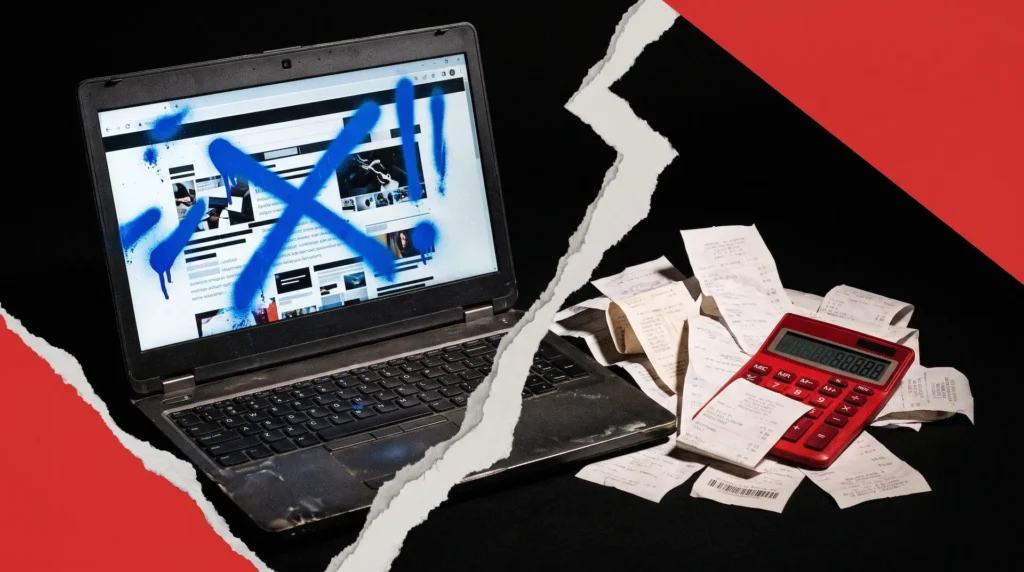
Here’s the thing nobody tells you when you’re choosing the cheapest option: a website doesn’t fail loudly. It doesn’t crash with a big red error message telling you you’ve lost a customer. It just quietly, politely, loses you money every single week, and you never see the bill for it because there isn’t one. There’s just a phone that rings a bit less than it should.
The forms nobody checks
This is the one that actually makes me angry, not because it’s complicated to fix, but because it’s so easy to never notice. A broken form doesn’t announce itself. The visitor fills it in, hits submit, sees a nice little “thank you” message, and leaves happy. You never hear from them again, and you have absolutely no reason to suspect anything went wrong, because as far as you know, nobody’s contacted you. Except they did. It just went nowhere.
I’ve found this exact bug on three different sites this year. Three. All built by someone who was cheap and fast, none of them tested after launch, because why would you test a form that clearly “works” when you fill it in yourself and it says thank you?
If you’ve never actually had a friend fill in your contact form from their own phone and confirmed you got the email — do that today. Right now, actually. I’ll wait.
The mobile problem you’re not seeing
You’re reading this on a laptop, probably. So is the guy who built your site, most likely, because that’s how web developers work — big screen, nice monitor, everything looks grand. Your customers are not doing that. Somewhere around 70-80% of them are on a phone, usually standing in a car park, usually in a hurry, usually one bad experience away from just calling the next name on the list instead.
A site that looks “fine” on a laptop and has text running off the edge of a phone screen, or a phone number you have to zoom in to read, isn’t a design quirk. It’s a closed sign on your shop door during business hours.
Speed. Nobody thinks about speed until I bring it up.
There’s research on this that gets quoted so often it’s basically wallpaper at this point, but the number’s real: past about 3 seconds of load time, a big chunk of visitors just leave. Not annoyed-but-staying. Gone. Tab closed, back to Google, onto whoever loaded faster.
If your site’s hosted on some £2-a-month shared server with forty other sites crammed onto it, or it’s dragging five unused plugins and a slider nobody ever updates, you’re not saving money on hosting. You’re paying for hosting AND paying, invisibly, in customers who never waited around to see what you offer.
Looking outdated is a trust problem, not a taste problem
This one’s less about mechanics and more about psychology, but it’s just as real. People make snap judgments about whether a business is “still going” based on how current the website feels. Fair or not, a site that looks like 2016 — Comic Sans energy, stretched stock photos, a carousel slider nobody’s touched — quietly tells a visitor “this might be run by someone who’s checked out.” And if they’re choosing between you and a competitor whose site looks like it was built this decade, that impression matters more than you’d like.
So what’s the actual cost?
Let’s do rough maths, because vague warnings don’t convince anyone. Say your average job or sale is worth £150, and you’re losing even two enquiries a month to a broken form, a slow load, or someone bouncing off a dodgy mobile layout. That’s £300 a month, £3,600 a year, gone — not to a competitor who’s better than you, just to one who’s easier to contact.
Compare that to what a proper, working website costs to run — and suddenly the “expensive” option isn’t the one with a monthly fee. It’s the one silently costing you a few hundred quid a month and never sending an invoice for it.
What to actually do about it
You don’t need to rebuild from scratch necessarily. Start by checking the basics yourself: fill in your own contact form from your phone and see if the email lands. Load your own site on 4G, not wifi, and time it. Ask someone who’s never seen your site to find your phone number in under five seconds.
If any of that goes wrong, that’s not a “someday” fix. That’s money leaving your account right now, quietly, every week, with no receipt to show for it.
Happy to take a quick look at yours if you want — costs you nothing to ask, and at least you’ll know. Drop me a message on the contact page.